
Terraced Yard With Retaining Walls and Patios: Spring Design Guide (Colorado Springs)
If your backyard slopes, spring can feel like the season when you finally want to do something about it. Maybe you’ve got a nice view, but not a nice place to sit. Or your kids and dog slide down the hill like it’s a tiny ski run.
That’s where a terraced yard with retaining walls and patios shines. Instead of fighting the slope, you turn it into a few flat, usable outdoor rooms, like a dining patio, a fire pit hangout, and a small lawn or garden level.
In this guide, we’ll walk through how terraced patios and retaining walls are usually planned in Colorado Springs, what to watch out for (drainage is the big one), and how to design it so it looks natural and lasts through freeze-thaw seasons.
Why do terraced patios work so well on sloped yards?
A terraced design is basically “leveling your yard in stages.”
Instead of one big wall and one big flat pad (often expensive and sometimes awkward), you create:
A top level near the house (easy access for grilling, dining, or a hot tub)
A middle level (fire pit, seating wall, lounge chairs)
A lower level (play space, turf, garden bed, or a simple walkway loop)
This approach tends to look more “built-in” and less like a wall was dropped in the middle of your yard.
It can also help with water control, because each level can be shaped to guide runoff where you want it to go, instead of letting it rush downhill.
What should you plan first? Start with water and soil
Most homeowners start with the fun stuff: stamped concrete patterns, wall color, or where the fire pit should go.
We like to start with two less-exciting things that control everything else:
1) Drainage and where water will go
Retaining walls hold back soil. When that soil gets wet, it gets heavier, and it pushes harder. If water gets trapped behind a wall, pressure builds fast.
Good wall designs include drainage details so water doesn’t “load up” behind the wall, like gravel backfill zones and a drain pipe near the base of the wall.
2) Colorado’s soil movement
A lot of the Front Range has clay-heavy soils that swell when wet and shrink when dry. That movement is a big reason patios crack, steps settle, and walls shift when things aren’t built right.
This doesn’t mean you can’t build a great terraced yard here. It just means the design has to respect moisture control, base prep, compaction, and drainage.
Watch out for: dumping roof runoff right behind a retaining wall or onto a patio corner. That’s asking for movement.
How do you decide the layout of each terrace?
Here’s a simple way to think about it:
Step 1: Pick your “must-have” zones
Most families do best with 2–3 zones total. For example:
Dining patio near the back door
Fire pit patio a few steps down
Small turf area below for kids and pets
Trying to cram five zones into a modest Colorado Springs yard usually makes everything feel tight.
Step 2: Plan the path of travel
Ask: “How will we move through this yard when our hands are full?”
Grill food to the table
Carry drinks to the fire pit
Let kids run without tripping over odd steps
You want the stairs and landings to feel obvious and safe, not like an obstacle course.
Step 3: Use the terraces to “hide” height changes
Instead of one tall wall, you might use two shorter walls with a patio shelf in between. Visually, it’s calmer. Structurally, it often simplifies the project.
What kind of retaining wall is best for terracing?
There isn’t one perfect wall type. It depends on height, style, and what you’re building above or near it.
Here are common options we design and build in the Colorado Springs area:
Segmental block retaining walls
These are the stacked concrete block systems you often see in clean, modern terraces.
Why people like them:
Great for a “tiered” look
Many color and cap options
Built-in system approach (when installed correctly)
Poured concrete retaining walls
These can look very sharp and custom, especially if you want a smooth or lightly textured finish.
Good fit when:
You want a specific modern look
You’re matching other concrete features
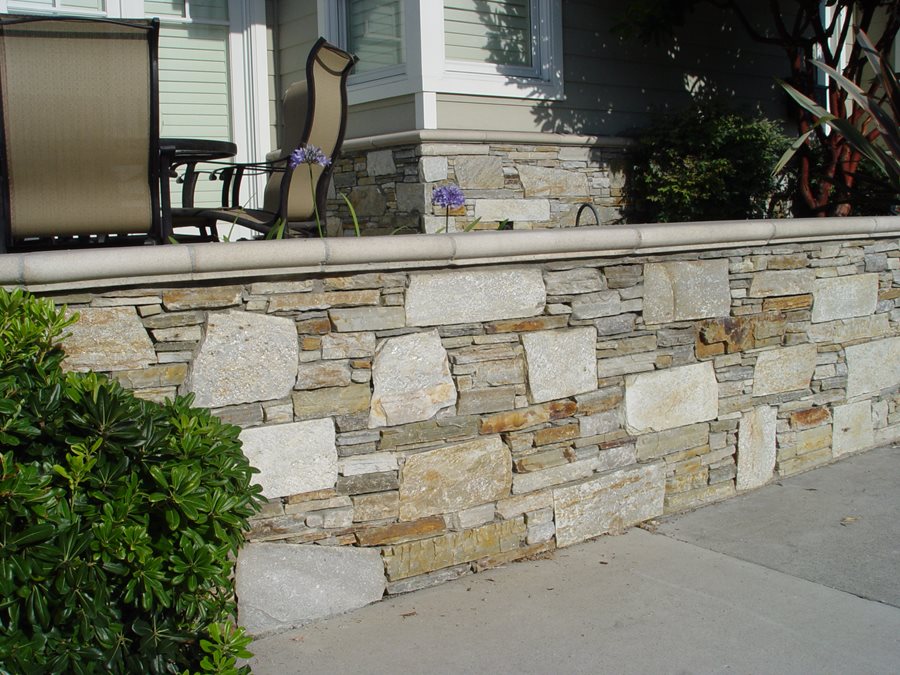
Seat walls that double as short retaining walls
Sometimes the best “retaining wall” is one that also becomes seating around a patio.
This is a smart move when:
The grade change is smaller
You want more function, not just structure
Quick local note (permits): In the Pikes Peak Regional Building Department area, retaining walls not more than 4 feet (measured from the lower grade to the upper grade) are generally listed as “permit not required,” with important exceptions (like supporting surcharge loads).
This is general education, not engineering or permitting advice. Always verify your specific plan with local requirements.
How do you design the patios and steps so they feel connected?
This is where the yard stops looking like “a wall project” and starts feeling like an outdoor living space.
Patio finish choices that work well in terraces
For terraced yards, we often recommend:
Broom-finish concrete for clean, classic traction
Stamped concrete patios if you want warmth, texture, and a high-end look
Colored concrete borders to visually define each level
A simple trick that works: use one main finish across all levels, then change only the border color or pattern so everything feels tied together.
Steps and landings matter more than people think
Terraced yards usually mean stairs. Good stairs aren’t just “code,” they’re comfort.
A better terraced layout includes:
A landing where you naturally pause
Wide steps where two people can walk side by side
Lighting so you’re not guessing at night
If you’ve ever walked down narrow steps with a plate of food, you know what I mean.
What should you include behind the walls to help them last?
Retaining walls fail more from water pressure than from “bad blocks.”
Most solid systems include:
A drainage zone (often gravel) behind the wall
A drain pipe at the bottom to move water out
Filter fabric or similar separation so soil doesn’t clog the drainage area over time
If a contractor talks a lot about how pretty the wall will look, but doesn’t want to talk about drainage, that’s a red flag.
How does freeze-thaw affect terraced patios and retaining walls?
Freeze-thaw is a big deal in our area because temperatures often cross above and below freezing.
One practical takeaway is to use exterior concrete that’s designed for freeze-thaw exposure. Air-entrained concrete is widely used to improve freeze-thaw durability.
The second takeaway is simple: keep water from sitting where it shouldn’t. Standing water near wall bases, on patio edges, or behind walls is where problems start. Your terraces should shed water on purpose, not by accident.
What does a smart spring design process look like?
Spring is a great time to design, even if your build happens a bit later (depending on schedules and weather).
Here’s a simple planning flow that works:
Site walk and measurements
We look at slope, access, and how you actually use the yard.Concept plan
Where the levels go, where steps go, and what the “zones” are.Drainage plan
This includes how water moves across each terrace and where it exits.Style selections
Wall materials, patio finish, caps, steps, lighting, and any extras like a fire pit or outdoor kitchen.Confirm permits and engineering if needed
Especially when wall heights, loads, or site conditions trigger it.
At NYCO Concrete & Landscape Design, we try to keep this part simple and clear. No pressure. Just a good plan, done with integrity, so your investment makes sense.
FAQ
Do I need a permit for a retaining wall in Colorado Springs?
In the Pikes Peak Regional Building Department area, retaining walls not more than 4 feet (measured from the lower grade to the upper grade) are generally listed as “permit not required,” with key exceptions (like surcharge conditions).Always verify for your specific property and design.
Is it better to build one tall wall or multiple shorter terrace walls?
Multiple shorter walls often look better and can make the yard feel more natural. Structurally and permit-wise, it can also reduce complexity, but it depends on your slope and layout.
What’s the biggest mistake people make with terraced patios?
Skipping drainage planning behind the walls or letting water dump into the system. Retaining walls need a way to relieve water pressure.
Will my concrete patios crack in freeze-thaw weather?
Concrete can crack over time, even when installed well. The goal is to reduce risk through good base prep, proper drainage, and using exterior-appropriate concrete mixes for freeze-thaw exposure
Can you terrace a small yard without making it feel cramped?
Yes. The key is limiting the number of levels (usually 2–3), keeping steps wide, and using clean lines so each zone has a purpose.
Our final thoughts
A terraced yard with retaining walls and patios is one of the best ways to turn a sloped Colorado Springs yard into something you’ll actually use. The secret isn’t fancy finishes (though those are fun). It’s smart layout, smart drainage, and building for our local conditions.
If you’re planning a spring project in or around Colorado Springs, you can request a free quote from NYCO Concrete & Landscape Design. Or call 719-644-3985 to schedule an on-site consultation and talk through your ideas.
Further Reading
Pikes Peak Regional Building Department: “Permit Not Required” list (retaining wall height rule and exceptions).PPRBD
NCMA: Segmental Retaining Walls Best Practices Guide (water management, drain pipe, gravel, and fabric details).Rochester Concrete Products
Freeze-thaw durability and air entrainment overview (research summary).PMC
Facebook
Instagram
TikTok